
Nitrogen vs. Air in Tires: What's the Difference?
In fleet management, the details that look small have a far greater impact on total cost and operational efficiency than you might think.
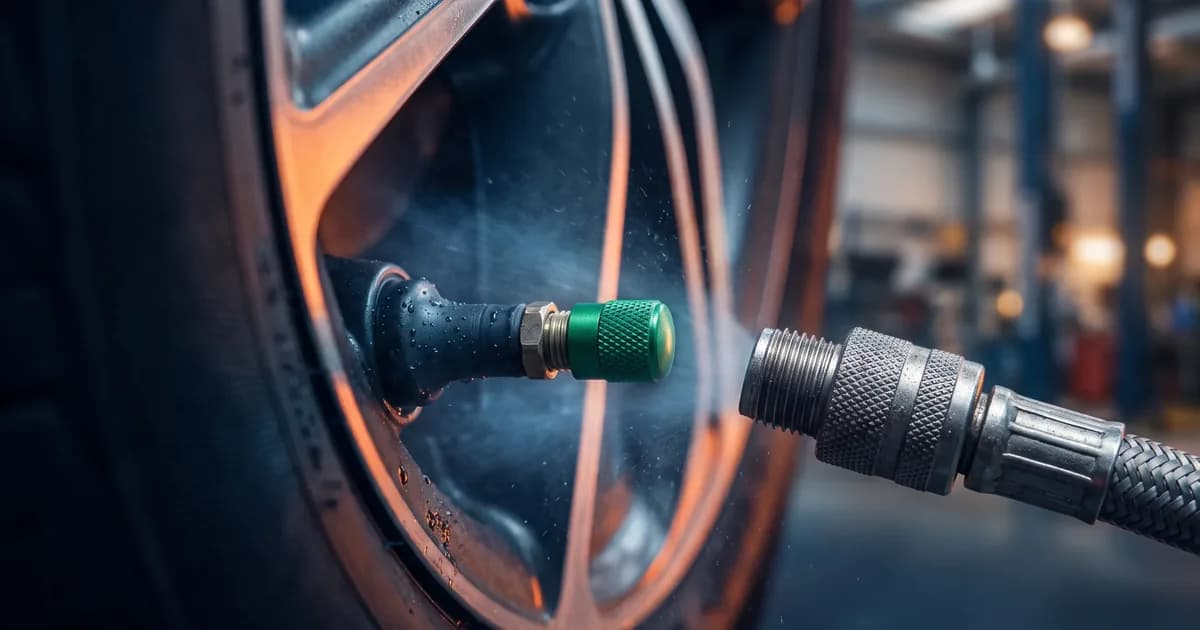
In fleet management, the details that look small have a far greater impact on total cost and operational efficiency than you might think.
Tire pressure is one of those critical details.
Standard practice is to inflate tires with compressed air. That air contains roughly 78% nitrogen and 21% oxygen. But the critical factor here is how oxygen behaves physically.
Oxygen is more sensitive to changes in temperature and pressure.
Over time, this can lead to:
Pressure fluctuations,
Moisture build-up inside the tire, and
Structural degradation caused by oxidation.
As a result, tire pressure that deviates from the ideal level:
Shortens tire life,
Increases fuel consumption,
Negatively affects road grip and driving safety.
This is why conventional air requires regular checks and constant intervention.
So what's the alternative?
Nitrogen.
When tires are filled with nitrogen instead of air, the system becomes far more stable.
Because nitrogen:
Is a drier gas (it contains no moisture),
Is less affected by temperature changes, and
Permeates out of the tire more slowly due to its molecular structure.
As a result, the tire holds its original inflation pressure for much longer.
That stability translates directly into operational advantages:
More consistent pressure means less tire wear, extending tire life by up to 30% on average,
Lower rolling resistance can deliver fuel savings of around 2%,
The need for periodic pressure checks and maintenance is reduced,
In the event of a blowout, the tire loses pressure more slowly (roughly 3 times slower than an air-filled tire).
Taken together, using nitrogen isn't just a technical preference — it's a strategic decision in terms of cost, safety and operational management.
The ones who make a difference in fleet management are those who optimize details like this before making major investments.
So — have you switched from air to nitrogen in your tires?