
How often should tires be replaced?
The right answer isn't mileage — it's tread depth. A timing guide for fleet safety.
How often should tires be replaced?
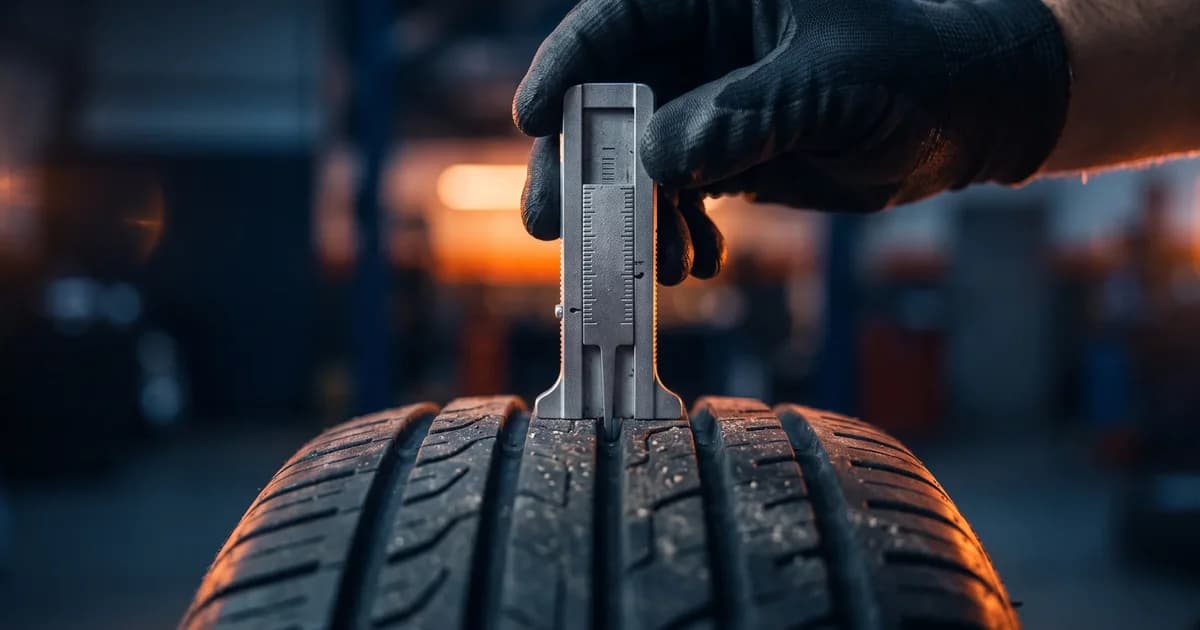
The right answer isn't a distance or a number of months — it's tread depth. The legal minimum is 1.6 mm, but for fleet safety we recommend planning the change before winter tires drop below 4 mm and summer tires below 3 mm.
Mileage is an indicator, not a rule
Under typical use, tires need replacing every 40,000-60,000 km — but driving style, load, road conditions and maintenance quality shift that range significantly. Relying on a single mileage rule at fleet scale is misleading; what actually matters is each vehicle's tread depth.
They age even when they're not used
Tire rubber stiffens over time, even in storage. Based on the DOT manufacturing code, the general guidance is that performance can fall outside a reliable range after 5-10 years — which is why tires waiting in storage need regular inspection too.
The real cause of early replacement: poor balancing
A tire mounted without proper balancing or alignment wears faster and unevenly compared to one mounted correctly. Every tire change at Checklas includes balancing as standard, as part of one defined workflow — a precondition for getting a tire's full expected life.
Tracking it at fleet scale
At each of our 216 service points, tread depth and DOT data are logged per plate at the moment of service; through ZyTire you see which vehicles are approaching replacement across your whole fleet from a single screen — no need to track vehicles one by one.
The real cost of delaying a change
Continuing on low tread depth extends braking distance, increases fuel consumption and raises accident risk on wet or snowy surfaces — a delayed change costs more than it appears to.